

GT Metabolic Solutions Inc. is leading the world with its development of magnetic compression anastomosis technologies. An elegant approach that uses magnets to help achieve anastomosis, the incisionless technique leaves behind no foreign material to impede the natural tissue healing process.
Our team has engineered a magnetic compression solution called delayed anastomosis technology (DAT) that surgeons can use to create consistent anastomosis while helping minimize potential complications, such as leaks and bleeds. Our solution democratizes the surgical approach to anastomosis.
GT Metabolic Solutions Inc. is disrupting the market by introducing magnetic compression anastomosis technologies to bariatric, metabolic and digestive health providers globally.
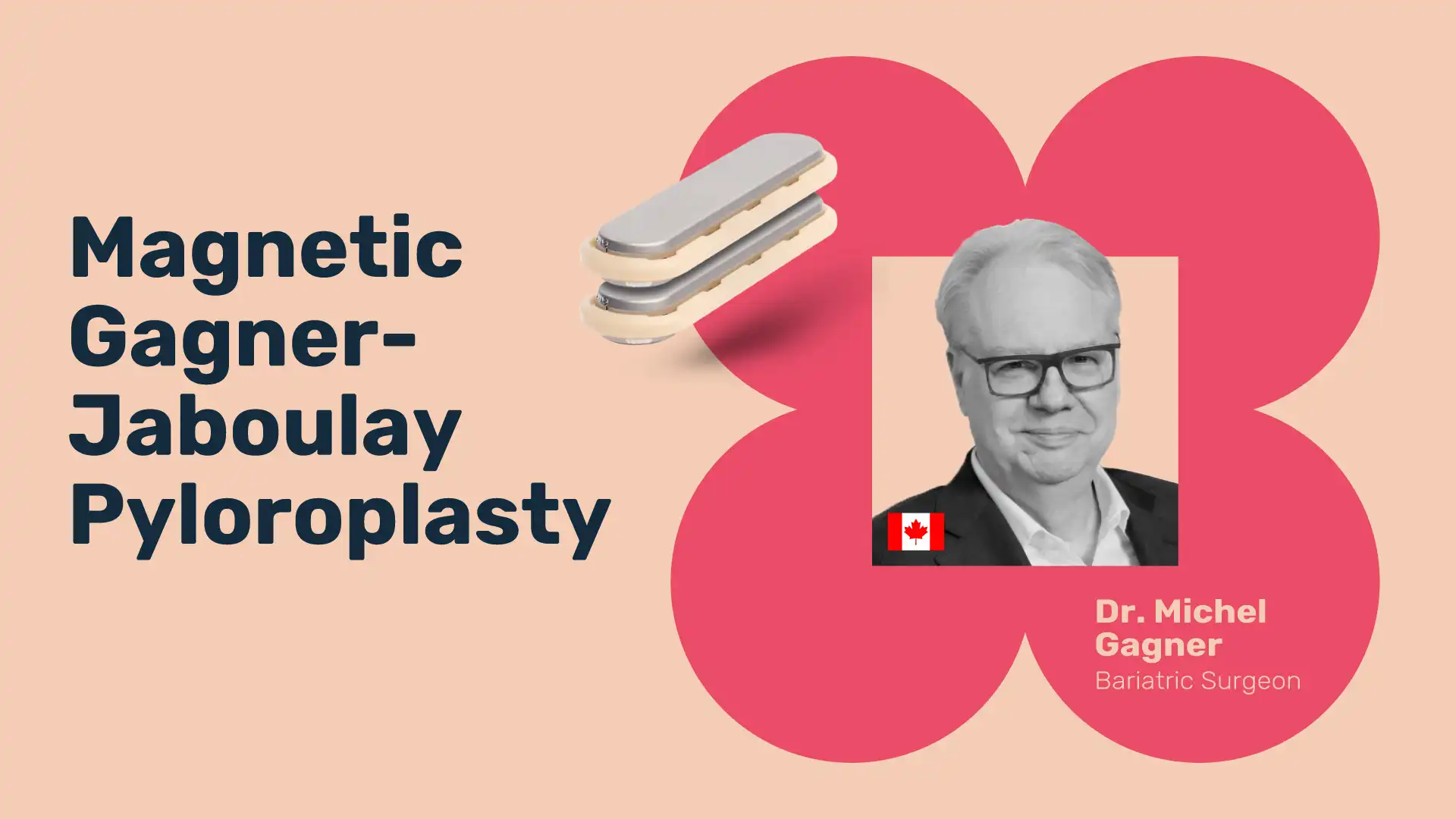
Gastroparesis remains a challenging condition, and conventional pyloroplasty relies on cutting the pylorus to improve gastric emptying. In this case, Dr. Michel Gagner and Dr. Lamees Almutlaq (Westmount Square Surgical Center) present a different approach: the magnetic Gagner-Jaboulay pyloroplasty. The patient is a 42-year-old woman with a previous magnetic duodeno-jejunostomy for superior mesenteric artery syndrome and confirmed gastroparesis, with 86% of solid contents retained at two hours and liquid emptying 2.5 times the norm. The video shows a laparoscopic magnetic gastro-duodenostomy in which paired linear magnets are delivered into the first portion of the duodenum and the distal antrum, each positioned approximately 1 cm proximal to the pylorus, to create a side-to-side connection between stomach and duodenum. A practical look at how magnetic anastomosis can reshape the surgical management of gastroparesis. Clinical case Dr. Michel Gagner (Canada) and his team at the Westmount Square Surgical Center (Canada) will perform a Magnetic Gagner-Jaboulay Pyloroplasty: A Side-to-Side Gastro-Duodenostomy for Gastroparesis and answer all your questions. Clinical Background A 42-year-old woman with a previous magnetic duodeno-jejunostomy for superior mesenteric artery (SMA) syndrome presented with confirmed gastroparesis. Gastric emptying studies showed delayed emptying of solid contents (86% retained at 2 hours) and of liquid contents (2.5 times the norm). Technique Description Rather than a standard pyloroplasty, a side-to-side gastro-duodenostomy was considered, leaving the pylorus uncut and unaltered. A laparoscopic magnetic gastro-duodenostomy was performed using paired linear magnets delivered into the first portion of the duodenum and the distal antrum, each positioned approximately 1 cm proximal to the pylorus.
Published
Nov 2026
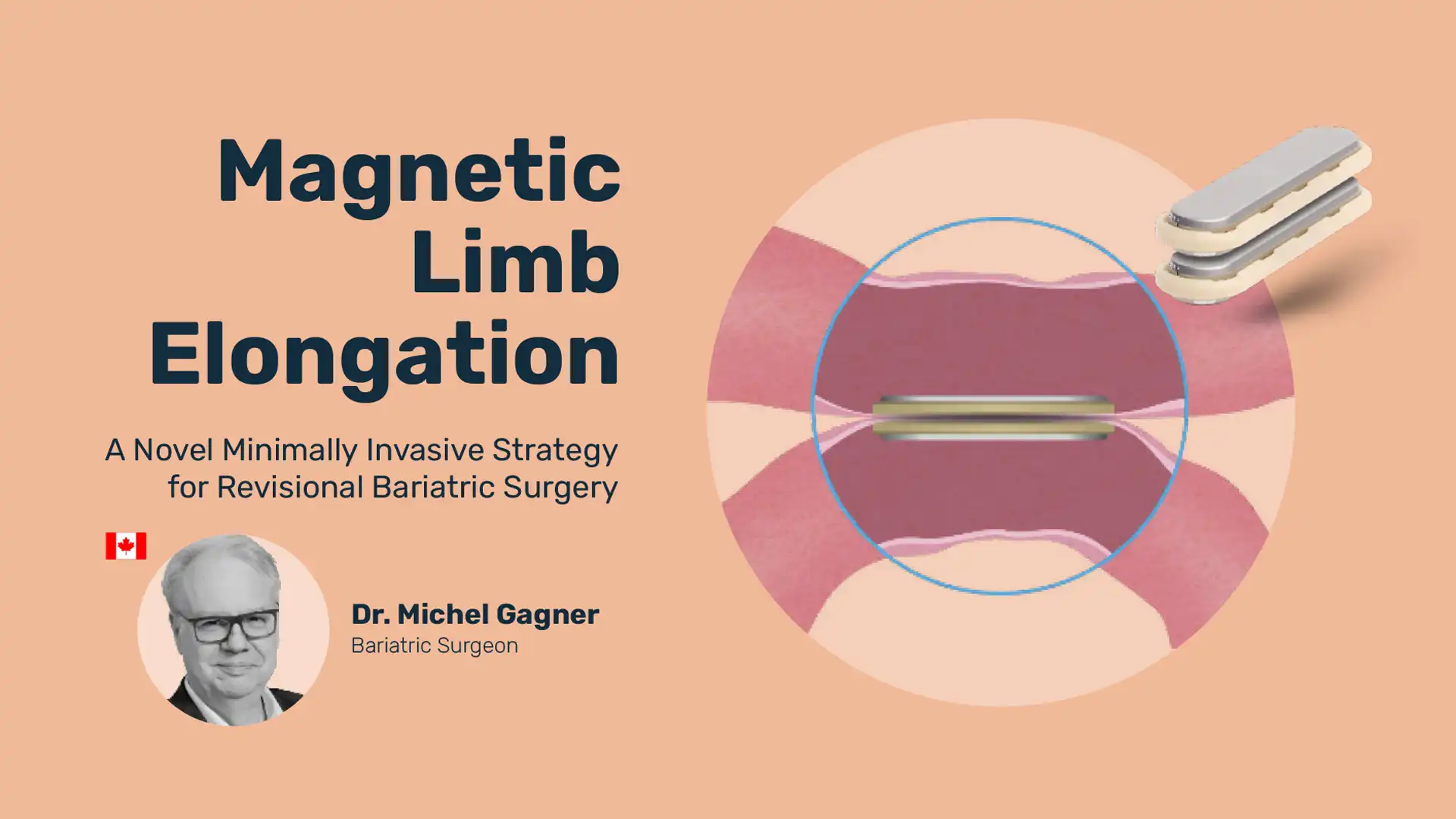
Dr. Michel Gagner (Canada) and his team at the Westmount Square Surgical Center (Canada) will perform a Magnetic Limb Elongation: A Novel MinimalIy Invasive Strategy for Revisional Bariatric and answer all your questions. Clinical Background A 66-year-old woman with an initial body mass index (BMI) of 45 kg/m² underwent a laparoscopic duodenal switch in 2000. Her BMI decreased to 22 kg/m² and remained stable for over 25 years. With advancing age, she expressed concern about the long-term nutritional demands of the procedure, particularly lifelong protein and micronutrient supplementation. Technique Description Rather than a complete reversal, a selective elongation of the common channel was considered. A laparoscopic magnetic jejuno-ileostomy was performed using paired magnets delivered into the alimentary jejunum and distal ileum, each positioned approximately 100 cm proximal to the jejuno-ileal “Y”.
Published
Jun 2026
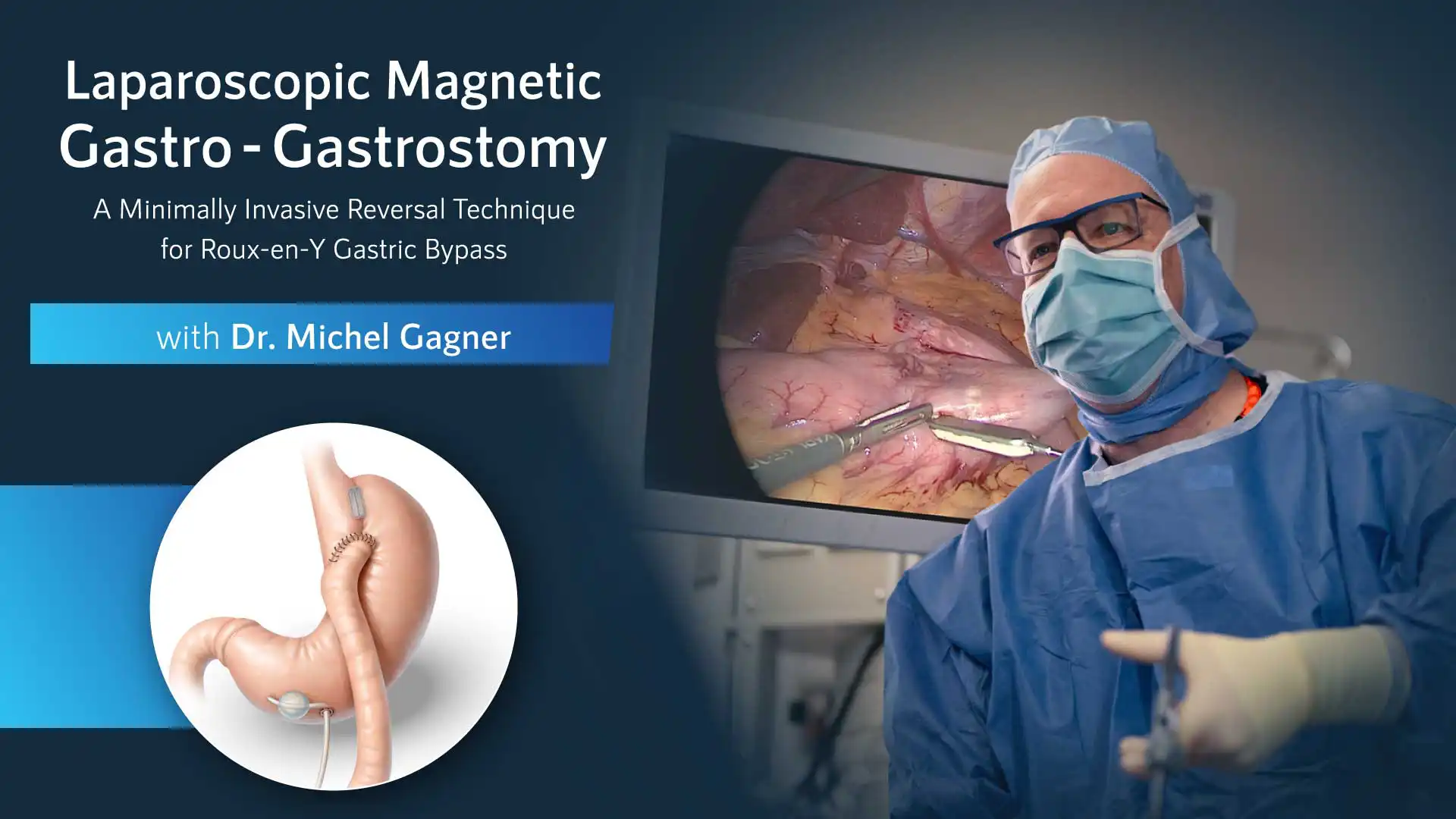
Dr. Michel Gagner (Canada) and his team at the Westmount Square Surgical Center (Canada) will perform a Laparoscopic Magnetic Gastro-Gastrostomy: A Minimally Invasive Reversal Technique for Roux-en-Y Gastric Bypass and answer all your questions. Clinical Background A 55-year-old woman with an initial body mass index of 48.6 kg/m² underwent a Roux-en-Y gastric bypass in 2021. Twelve months later, following an 80 kg weight loss, her BMI had decreased to 23.8 kg/m². In October 2025, she required emergency extensive open small-bowel resections for ischemia secondary to an internal hernia, leaving approximately 200 cm of residual small intestine. Technique Description The ensuing short-bowel syndrome prompted consideration of gastric bypass reversal because of severe anemia (hemoglobin 89 g/L), hypoproteinemia, hypoalbuminemia, hypoxemia, and peripheral edema. After several weeks of total parenteral nutrition, a magnetic gastro-gastrostomy with placement of a feeding gastrostomy was planned.
Published
Apr 2026
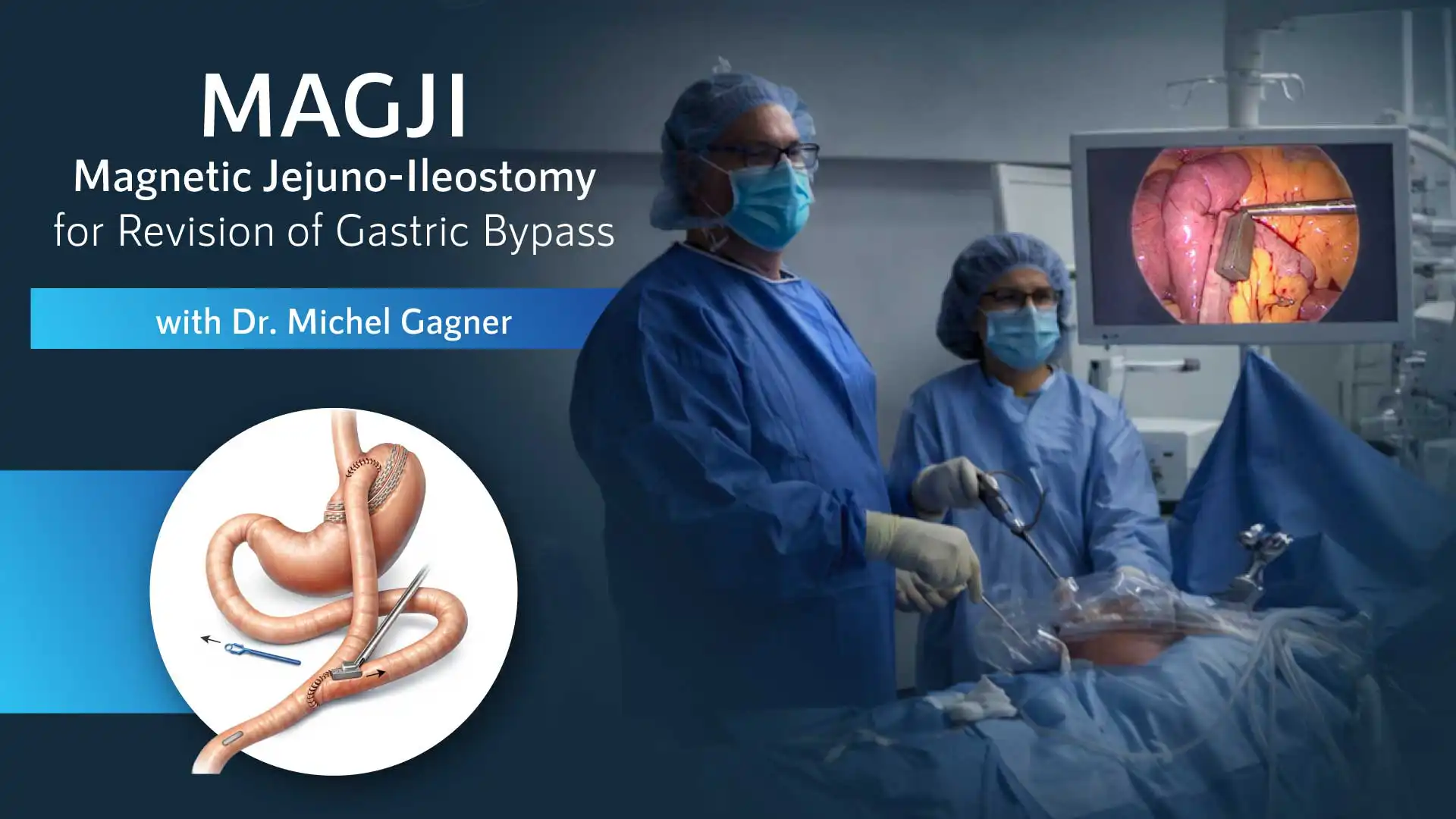
In this live surgery, Dr. Michel Gagner discusses the Magnetic Jejuno-Ileostomy (MagJI) as a specialized technique for the revision of gastric bypass. Developed in collaboration with GT Metabolic, the presentation details the clinical application of magnetic compression in creating anastomoses, providing surgeons with a technical overview of this minimally invasive approach for complex bariatric revisions. Dr. Michel Gagner (Canada) and his team at the Westmount Square Surgical Center (Canada) will perform a Magnetic Jejuno-Ileostomy (MagJI) for Weight Regain Post Gastric Bypass and answer all your questions. Clinical Background A 34-year-old woman, weighing 189 lb and measuring 5' 3" in height (BMI 33.5 kg/m²) at the time of consultation, has type 2 diabetes treated with dapagliflozin and a prior trial of tirzepatide. She underwent Roux-en-Y gastric bypass in 2014. Her preoperative weight was 240 lb (BMI 42.5 kg/m²), with a postoperative nadir of 128 lb (BMI 22.7 kg/m²), followed by a weight regain of 61 lb. Technique Description The procedure to be demonstrated is a Laparoscopic-Endoscopic Assisted Magnetic Jejuno-Ileostomy (MagJI). This technique is presented as a minimally invasive, non-stapled revisional option for treating weight regain and type 2 diabetes in patients with prior Roux-en-Y Gastric Bypass, creating a side-to-side anastomosis through magnetic compression to enhance malabsorption and metabolic signaling. Procedure Steps Laparoscopic Access & Identification: Mapping of the previous Roux-en-Y anatomy and measurement of bowel limbs. Proximal Magnet Delivery: Endoscopic placement of the first magnet into the jejunal Roux limb. Distal Magnet Delivery: Laparoscopic placement of the second magnet into the distal ileum. Magnetic Coupling: Alignment and "clicking" of magnets to create side-to-side serosal apposition. Seromuscular Fixation: Security suturing and mesenteric closure to prevent internal hernia. Spontaneous Anastomosis: Ischemic tissue fusion and natural evacuation of magnets. Training Objectives Understand the principle of distalisation Review recent literature on the subject Present technical details of side-to-side magnetic jejuno-ileostomy
Published
Feb 2026
Share it with your network and help spread clinical knowledge.