
General Surgery
Department of Abdominal Surgery, University Hospital Leuven, Leuven 3000, Belgium
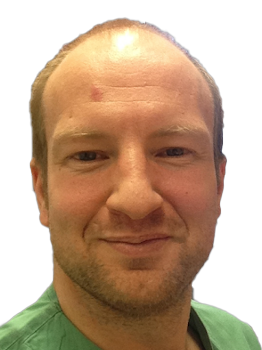
Albert Wolthuis graduated as medical doctor at the Catholic University of Leuven in 2002. He trained as a general surgeon in Bonheiden (Belgium), Exeter (United Kingdom), and Leuven. In 2008 he became surgeon and he further specialized in abdominal surgery under professor F. Penninckx and professor A. D’Hoore. He became a colorectal surgeon in 2011 and is currently a staff member at the department of abdominal surgery in Leuven specialized in minimally invasive techniques.

Rectal prolapse is more common in females and increases in frequency with age. Treatment of rectal prolapse is primarily surgical; however, over 100 different procedures have been proposed for the management of this condition. The primary goals of surgery are to correct the prolapse, alleviate preoperative discomfort, and to prevent or improve fecal incontinence or constipation. The procedures to address rectal prolapse can broadly be split into two main approaches (abdominal and perineal). In addition, as laparoscopic surgical approaches to treating colorectal disorders become more common, they are being used more frequently to repair rectal prolapse, because excellent functional results can be obtained with less surgery related trauma. Although there is currently no established consensus as to the best surgical treatment, a laparoscopic approach to rectal prolapse repair has become increasingly popular and several studies have shown the benefits of laparoscopy when compared to open rectopexy. In this video Albert Wolthuis describes an abdominal surgical approach for the management of a rectal prolapse, a laparoscopic ventral rectopexy. There are two steps during this operation: a first one consisting in the dissection of the anterior wall and rectovaginal septum to reach the pelvic floor musculature and preserving the lateral attachment of the rectum. The second step is the fixation of pelvic mesh and the closure of the pelvic peritoneum.
Published
Nov 2014

Main points of controversy in the treatment of colon cancer by laparoscopy are: the way of performing the dissection, medial to lateral or lateral to medial and surgical timing to follow (vessel section, avascular plane dissection of mesocolon and descent of angles). In the literature and consensus guidelines of the Scientific Societies, it seems to be of a greater tendency to perform as first manoeuvre the vascular section (to decrease the release of neoplastic cells with tumor manipulation) continuing the dissection of the avascular plane of the mesocolon plane from medial to lateral plane and finally release of the angles. However, there is no scientific evidence that this form of addressing cancer influences the performance of an oncological resection or in survival of patients. In the video Albert Wolthuis presented a dissection for right colon cancer, in which in the first instance the dissection of the lateral mesocolon is performed until the duodenum is identified, releasing the whole of the right colon, the second step is the vascular ligature and ends with the descent of hepatic angle.
Published
Nov 2014
Help your network discover Dr. Albert Wolthuis's clinical expertise.
